
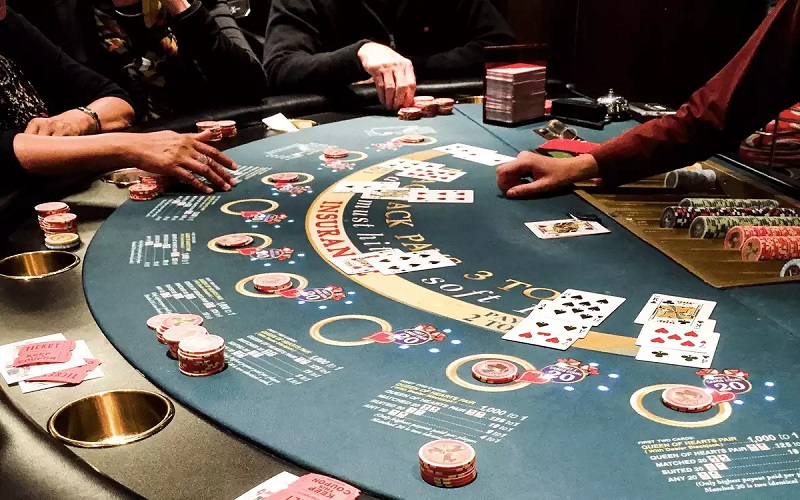
Walk across any casino floor or browse an online gaming lobby, and the familiar green felt of the blackjack table remains an undisputed centerpiece. While the foundational objective never wavers—construct a hand closer to 21 than the dealer without busting—the modern game is far from uniform. Over decades of operational refinement and digital innovation, casinos and mathematicians have developed dozens of distinct blackjack variations.
Each variant introduces deliberate alterations to card decks, payout ratios, and dealing procedures. For players, these subtle shifts do more than refresh the visual presentation; they fundamentally reshape the mathematical house edge and require entirely different strategic decisions on every hand.
The Foundational Divide: American vs. European Blackjack
Before exploring radical rule shifts, understanding the structural split between American and European blackjack is essential. This distinction centers on when the dealer receives their second card and how that timing affects player risk.
In American Blackjack, the dealer receives two cards at the start of the round: one face up and one face down, known as the hole card. If the upcard is an Ace or a ten-value card, the dealer immediately peeks at the hole card to check for a natural blackjack. If the dealer has 21, the hand ends on the spot. While this brings a quick loss, it protects the player from risking additional capital on double downs or split hands that would ultimately be wiped out anyway.
European Blackjack, by contrast, operates on a no-hole-card rule. The dealer receives only one card face up during the initial deal. Players must complete all of their hitting, standing, doubling, and splitting decisions before the dealer draws a second card. This introduces a specific vulnerability: a player might invest multiple units doubling down on an eleven or splitting a pair of eights, only to watch the dealer draw a natural 21 at the end of the round, claiming all of those extra wagers. Because of this dynamic, optimal basic strategy in European games is noticeably more defensive against dealer Aces and face cards.
Spanish 21: High-Action Rules and the Stripped Deck
Spanish 21 is arguably the most popular and player-friendly alternative to standard blackjack, provided you understand its central trade-off. The game is played using four to eight shoe decks from which all four 10-spot cards have been removed, leaving 48-card Spanish decks consisting of aces, numbered cards two through nine, and picture cards (jacks, queens, and kings).
Removing standard tens mathematically favors the house, as it diminishes the likelihood of hitting natural blackjacks and makes it harder for players to bust stiff dealer totals. To compensate for this structural disadvantage, Spanish 21 equips the player with an array of generous procedural benefits:
-
Player 21 Always Wins: A player total of 21 always beats a dealer total of 21, and a player natural blackjack beats a dealer natural blackjack, paying 3:2.
-
Late Surrender and Double Down Rescue: Players can surrender their hand after doubling, relinquishing only their original wager and saving the doubled portion.
-
Flexible Doubling: Doubling down is permitted on any number of cards, not just the initial two-card deal.
-
Tiered Bonus Payouts: Five-card, six-card, and seven-card combinations that total 21 trigger automatic bonus payouts, as do specific configurations like 6-7-8 or 7-7-7 of mixed or matched suits.
Because of these compensatory rules, Spanish 21 carries one of the lowest house edges in the casino, provided the player adapts their approach to account for the absence of ten-spot cards.
Blackjack Switch: Trading Cards Across Two Hands
Created in the early 2000s, Blackjack Switch turns traditional table etiquette upside down by allowing players to manipulate their dealt cards. In this variation, each player must place two equal bets, receiving two distinct hands played simultaneously.
Before making standard hit or stand choices, the player has the option to switch the second card dealt to each hand. This allows you to combine complementary cards to build stronger holdings. For example, if you are dealt a 5-6 (totaling 11) on one hand and a 10-5 (totaling 15) on the other, you can swap the second cards to create a formidable 10-6 (16) and a powerful 5-5 or an optimized double-down starting point.
To pay for this massive tactical advantage, the game introduces two strict balancing mechanics:
-
The Dealer 22 Push: If the dealer busts with a total of 22, it does not count as a dealer loss. Instead, it pushes against all active, non-busted player hands. Only a natural player blackjack beats a dealer 22.
-
Even-Money Naturals: Natural blackjacks pay 1:1 (even money) rather than the conventional 3:2 payout.
Double Exposure: Complete Information with Steep Penalties
Double Exposure blackjack eliminates the mystery of the dealer’s hand entirely. Both of the dealer’s initial cards are dealt face up, granting players complete information before making a single decision.
Knowing the dealer’s exact total removes all speculative guesswork. If the dealer shows a total of 20, you know with certainty that standing on an 18 guarantees a loss, so basic strategy dictates that you must hit an 18, 19, or even 20 to attempt a tie or a win.
However, absolute transparency comes at a steep price. To preserve the house edge, casinos enforce punishing constraints:
-
The House Wins Ties: The dealer wins all ties on completed hands, with player pushes occurring only on natural blackjacks.
-
Reduced Payouts: Natural blackjacks pay strictly even money.
-
Restricted Maneuvers: Doubling down and splitting options are heavily curtailed, and surrender is almost never permitted.
While the sensation of seeing both cards feels empowering, the rule adjustments make Double Exposure a volatile and demanding game that punishes casual strategic errors.
Free Bet Blackjack: House-Funded Doubles and Splits
A modern staple in American gaming venues, Free Bet Blackjack appeals directly to bankroll preservation. Whenever a player receives a hard total of 9, 10, or 11, the casino covers the cost of the double-down wager with a gold-colored free-bet token. If the hand wins, the player receives payout on both their original wager and the free bet; if the hand loses, the player only loses their original stake.
The same principle applies to splits: the house finances free splits on all pairs except ten-value cards. As with Blackjack Switch, the casino offsets these complimentary wagers by implementing the Push 22 rule, meaning dealer totals of 22 result in a push for all non-busted player hands.
Navigating Rule Variations Wisely
Approaching different blackjack tables requires an analytical eye. The most dangerous mistake a bettor can make is assuming that standard basic strategy applies universally across all variants. Every adjustment—whether it is deck composition, the dealer standing on soft 17, or a 22-push rule—shifts the mathematical equilibrium.
Furthermore, players must always watch the baseline payout for a natural blackjack. Variants that reduce natural payouts from the traditional 3:2 ratio down to 6:5 inflate the house edge by roughly 1.4 percent, wiping out the benefit of almost any other player-friendly rule on the table.
Treating each variant as its own distinct game with its own mathematical framework is the key to maximizing both your entertainment and your bankroll at the tables.
